https://www.digitalconcerthall.com/en/concert/51066#
https://www.digitalconcerthall.com/en/concert/50995
Seong-Jin Cho in conversation with Marlene Ito
Marlene Ito: Seong-Jin Cho, willkommen bei den Berliner Philharmonikern. Wir freuen uns, Sie hier zu begrüßen.
말렌 이토 : 조성진 씨, 베를린 필하모닉에 오신 것을 환영합니다. 여기에서 당신과 인사하게 되어 반갑습니다.
Seong-Jin Cho: Ganz meinerseits. Vielen Dank.
조성진 : 제가 오히려 기쁜걸요. 정말 감사합니다.
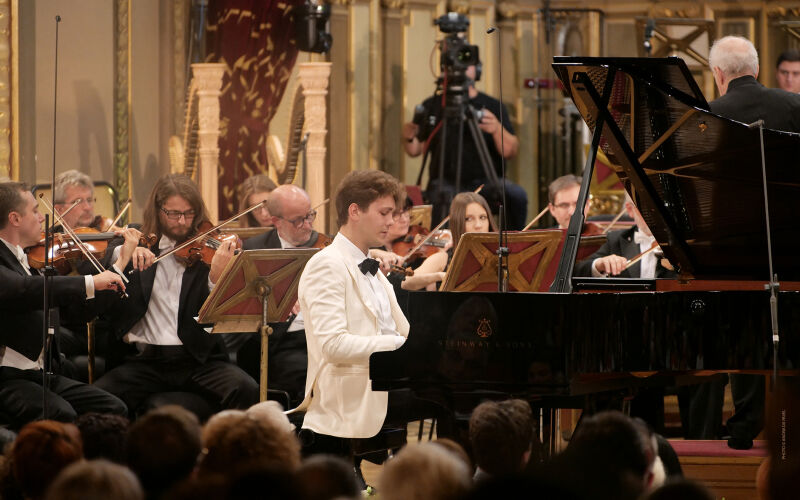
Marlene Ito: Sie debütieren diese Woche bei uns mit Ravels G-Dur-Klavierkonzert. Außerdem begleiten Sie uns auf unserer Asien-Tournee, zusammen mit Yuja Wang. Yuja Wang wird Bartóks klavierkonzert Nr. 2 spielen. Wir haben großen Glück, dass Sie beide für Lang Lang einspringen konnten. Wegen einer Verletzung musste er seine Konzerte leider absagen. Außer in Berlin werden Sie also in Frankfurt, Hongkong und Seoul spielen. Kein schlechter Gig für einen 23-Jährigen!
말렌 이토 : 당신은 이번 주에 우리와 함께 라벨의 G장조 피아노 협주곡으로 데뷔합니다. 또한 유자 왕과 함께 우리의 아시아 투어에 동행하시죠. 유자 왕은 버르토크의 피아노 협주곡 2번을 연주합니다. 두 분 모두 랑랑을 대신하게 되어 매우 행운입니다. 안타깝게도 그는 부상으로 콘서트를 취소해야만 했죠. 따라서 베를린 외에도 프랑크푸르트, 홍콩, 서울에서 연주하실 텐데요. 23세에게는 나쁜 출연이 아니죠!
Seong-Jin Cho: Ich war wirklich überrascht, als mich mein Manager wegen dieser Konzerte anrief. Es ist eine große Ehre für mich, mit den Berliner philharmonikern zu spielen. Es war schon immer mein Traum, mit diesem Orchester zu arbeiten. Ich bin sehr froh darüber.
조성진 : 매니저가 이 콘서트에 대해 전화를 했을 때 정말 놀랐어요. 베를린 필하모닉과 협연하게 되어 큰 영광입니다. 이 오케스트라와 협연하는 것이 항상 저의 꿈이었죠. 그것에 대해 매우 행복해요.
Marlene Ito: Spielen Sie das erste Mal in der Philharmonie?
말렌 이토 : 필하모니에서 연주하는 것이 처음인가요?
Seong-Jin Cho: Ja, es ist sogar mein Debüt in Berlin.
조성진 : 네, 베를린에서의 데뷔이기도 해요.
Marlene Ito: Auch in Berlin.
말렌 이토 : 베를린에서도요.
Seong-Jin Cho: Ja.
조성진 : 네.
Marlene Ito: Sie sind ja fast eine Art Rockstar, seit Ihrem Sieg beim Internationalen Chopin-Wettbewerb 2015. Wie hat das Ihr Leben verändert? Wie sieht Ihr Alltag jetzt aus?
말렌 이토 : 2015 쇼팽 국제피아노콩쿠르에서 우승한 이후 록 스타급이신데요. 인생이 어떻게 바뀌었나요? 지금의 일상은 어떠세요?
Seong-Jin Cho: Ehrlich gesagt, habe ich nicht das Gefühl, in Korea ein Rockstar zu sein. Natürlich bin ich durch den Wettbewerb bekannter geworden. Mein Leben hat sich sehr verändert. Dank des Chopin-Wettbewerbs konnte ich bei der Deutschen Grammophon aufnehmen. Ich konnte in der Carnegie Hall spielen - und mit den Berliner Philharmonikern. Aber mein Alltagsleben ist fast unverändert. Ich übe Klavier, ich esse, ich ruhe mich aus. Manchmal gebe ich Konzerte oder ich gehe auf Konzertreise. Aber meine Karriere hat sich nach dem Sieg beim Chopin-Wettbewerb verändert.
조성진 : 솔직히 한국에서 록 스타는 아닌 것 같아요. 물론 콩쿠르는 저를 더 유명하게 만들었죠. 그리고 제 인생이 많이 바뀌었어요. 쇼팽 콩쿠르 덕분에 도이치 그라모폰에서 음반을 발매할 수 있었죠. 카네기홀에서 연주했을 뿐만 아니라 베를린 필하모닉과도 협연했고요. 하지만 제 일상은 거의 변하지 않아요. 피아노 연습하고, 먹고, 휴식을 취하죠. 가끔 콘서트를 가지거나 콘서트 투어를 갑니다. 하지만 쇼팽 콩쿠르에서 우승한 이후 제 경력이 바뀌었네요.
Marlene Ito: Sie müssen jetzt sicher viel Chopin spielen, mehr als andere Solisten. Erfreulicherweise spielen Sie diesmal Ravels Klavierkonzert. Haben Sie das Werk für unser Konzert ausgewählt?
말렌 이토 : 당신은 이제 다른 독주자들보다 쇼팽을 많이 연주해야 하는데요. 다행히 이번에는 라벨의 피아노 협주곡을 연주하시네요. 우리의 콘서트를 위한 작품을 선택하셨나요?
Seong-Jin Cho: Ich habe dem Orchester meine Repertoireliste geschickt. Die Wahl fiel dann auf das Ravel-Konzert, womit ich sehr zufrieden bin. Es ist eines meiner Lieblingskonzerte aus dem 20. Jahrhundert. Ich spiele es, seit ich 15 Jahre alt bin. Aber ich spiele es erst zum dritten Mal mit einem Orchester. Aber ich kenne es sehr gut und freue mich, es hier zu spielen.
조성진 : 실제로 제가 원하는 레퍼토리 목록을 오케스트라에 보냈는데요. 제가 매우 만족하는 라벨 협주곡으로 결정되었어요. 제가 좋아하는 20세기 협주곡들 중의 하나입니다. 15세 때부터 연주해왔어요. 하지만 오케스트라와 협연한 것은 이번이 세 번째입니다. 하지만 이 곡을 아주 잘 알고 있으며 여기에서 연주하게 되어 기뻐요.
Marlene Ito: Können Sie uns etwas zu dem Stück sagen?
말렌 이토 : 작품에 대해 말씀해주실 수 있나요?
Seong-Jin Cho: Der erste und der dritte Satz sind stark vom Jazz beeinflusst. Ich spüre dort auch einen spanischen Einfluss. Der erste und der dritte Satz sind sehr stark gewürzte Musik. Den zweiten Satz finde ich persönlich am schwierigsten. Das lange Klaviersolo am Anfang ist recht schwierig. Ravels Musik ist sehr schlank komponiert. Er gibt nicht sehr viele Noten, aber viel Gefühl. Es ist ein Gefühl der Einsamkeit, das man zum Ausdruck bringen muss, trotz der wenigen Noten und der recht schlichten Musik. Rubato und Phrasierung sind natürlich wichtig. Aber es ist sehr schwierig, diese Art von Gefühl musikalisch richtig auszudrücken. Ich musste vieles ausprobieren, um den richtigen Klang zu finden.
조성진 : 1악장과 3악장은 재즈의 영향을 많이 받아요. 스페인의 영향도 느껴지고요. 1악장과 3악장은 매우 흥미로운 음악인데요. 개인적으로 2악장이 가장 어렵다고 생각해요. 처음의 긴 피아노 솔로가 꽤 어렵거든요. 라벨의 음악은 매우 간결한 구성인데요. (라벨은 매우 간결하게 작곡했는데요.) 음들이 많지 않은데도 많다는 느낌을 주죠. 음들이 적고 다소 단순한 음악임에도 표현해야 할 외로움이 느껴져요. 루바토와 프레이징도 물론 중요해요. 하지만 음악적으로 그런 느낌을 제대로 얻기는 매우 어려워요. 올바른 소리를 찾기 위해 많은 노력을 기울여야만 했죠.
Marlene Ito: Sie haben die Jazz-Elemente in diesem Konzert erwähnt. Die Einflüsse, die auf Komponisten einwirken, spiegeln sich in ihrem Werk. Die Jazz-Elemente stammen aus Ravels Zeit in den USA. Wie ist das für Sie als Interpret? Beeinflusst Ihre Umgebung Ihr Musikverständnis? Sie haben lange Zeit in Paris gelebt. Vor zwei Monaten sind Sie nach Berlin umgezogen. Hat die Zeit in Paris Ihnen geholfen, französische Musik besser zu verstehen?
말렌 이토 : 이 협주곡에서 재즈 요소들을 언급하셨는데요. 작곡가들에게 끼치는 영향은 그들의 작품에 반영되죠. 재즈 요소들은 라벨이 미국에 있었던 시기에 나오는데요. 해석자로서 그게 어떤가요? 환경이 음악에 대한 이해에 영향을 주나요? 당신은 오랫동안 파리에 거주하셨는데요. 두 달 전에 베를린으로 이주하셨죠. 파리에서 보낸 시간이 프랑스 음악을 더 잘 이해하는 데 도움이 되었나요?
Seong-Jin Cho: Museumsbesuche und die Beschäftigung mit französische Malerei können helfen, französische Musik besser zu verstehen. Zumindest auf einer unterbewussten Ebene. Aber wer in Berlin oder Hannover studiert hat, spielt darum Beethoven oder Brahms nicht besser. Jeder kann diese Komponisten gut spielen. Aber meine Zeit in Paris hat mich in gewisser Weise inspiriert.
조성진 : 박물관을 방문하고 프랑스 그림을 공부하면 프랑스 음악을 더 잘 이해할 수 있어요. 적어도 잠재의식 수준에서. 하지만 베를린이나 하노버에서 공부한 사람이라고 해서 베토벤이나 브람스를 더 잘 연주하지는 않아요. 누구든지 이 작곡가들을 잘 연주할 수 있죠. 하지만 파리 시절은 제게 어느 정도(어떤 면에서는) 영감을 주었어요.
Marlene Ito: Was hat Sie bewogen, nach Berlin zu ziehen?
말렌 이토 : 베를린으로 이사한 이유는요?
Seong-Jin Cho: Ich wollte einfach hier leben. Die Entscheidung fiel im Dezember 2016. Letztes Jahr war ich dreimal in Berlin. Die Stadt gefiel mir sehr gut. Das Musikleben ist wirklich spannend.
조성진 : 그냥 여기서 살고 싶었어요. 2016년 12월에 결정했어요. 작년에 베를린에 세 번 있었는데요. 이 도시가 아주 좋았거든요. 음악 인생이 정말 흥미진진해요.
Marlene Ito: Ja, es pulsiert, nicht wahr?
말렌 이토 : 네, 활기가 넘치지 않나요?
Seong-Jin Cho: Hier passiert sehr viel. Im Vergleich zu Paris ist die Stadt recht jung. Natürlich ist Paris wunderschön. Dort gibt es tolles Essen. Hier ist das Essen auch... Ich habe ein gutes Restaurant gefunden. Ich mag die Stadt.
조성진 : 여기선 많은 일이 일어나고 있는데요. 파리와 비교해서 이 도시는 매우 젊어요. 물론 파리는 아름답죠. 거기(파리)에는 좋은 음식이 있어요. 여기(베를린)에도 있고... 저는 좋은 식당을 찾았어요. 그래서 이 도시를 좋아해요.
Marlene Ito: Auf unserer Asien-Tournee werden wir in Seoul spielen. Wie ist es für Sie, in Ihrer Heimatstadt zu spielen? Bedeutet es mehr Stress, vor Freunden, Familie und Fans zu spielen? Oder fühlen Sie sich dabei wohler?
말렌 이토 : 아시아 투어에서 우리는 서울에서 연주합니다. 고향에서 연주하는 건 어떠세요? 친구들, 가족, 팬들 앞에서 연주하는 것은 더 스트레스가 되나요? 아니면 더 편하게 느끼시나요?
Seong-Jin Cho: Das ist nicht stressig. Ich komme immer gern nach Hause zurück. Das Publikum in Korea lässt sich leicht begeistern, mehr als in vielen anderen Ländern. Das hat mir immer viel Energie gegeben. Ich freue mich sehr, dort mit den Berliner Philharmonikern aufzutreten.
조성진 : 스트레스 받진 않아요. 항상 고향으로 돌아오는 걸 즐기거든요. 한국의 청중은 다른 많은 나라들보다 더 열정적인데요. 그건 항상 제게 많은 에너지를 주었죠. 따라서 베를린 필하모닉과 협연하게 되어 매우 기쁩니다.
Marlene Ito: Im Konzertsaal wird Ihnen sicher jeder Erfolg wünschen. Vermutlich wartet derzeit ganz Asien auf Sie. Ihr Instagram-Foto ist eine Postkarte von Japan Arts. Darauf wünscht Ihnen das ganze Team viel Glück für Ihr Debüt mit uns. Im November warten etliche Highlights auf Sie. Zunächst Ihr Debüt mit uns. Am 17. November erscheint dann Ihr neues CD-Album mit dem Titel Debussy. Warum Debussy?
말렌 이토 : 콘서트홀에 있는 모든 사람이 당신의 성공을 기원합니다. 현재 아시아의 모든 지역이 당신이 연주할 순간을 기다리고 있을 거예요. 당신의 인스타그램은 일본 그림이 있는 엽서네요. 팀 전체가 우리와 함께 데뷔한 최고의 행운을 기원합니다. 11월에 많은 하이라이트가 당신을 기다리고 있는데요. 우선 우리와 함께 하는 당신의 데뷔가 있죠. 드뷔시가 수록된 당신의 새로운 음반은 11월 17일에 발매됩니다. 드뷔시인 이유는요?
Seong-Jin Cho: Eine Debussy-Aufnahme plane ich seit anderthalb Jahren. Das war noch vor der Einspielung des Chopin-Konzerts. Das Leben in Paris half mir, seine Musik zu verstehen und zu spielen. Ich wollte einfach Musik von Debussy einspielen. Und nächstes Jahr ist sein 100. Todestag. Das hat für mich eine große Bedeutung.
조성진 : 1년 반 동안 드뷔시 녹음을 계획하고 있었어요. 쇼팽 협주곡이 녹음되기 전이었죠. 파리에 살면서 그의 음악을 이해하고 연주할 수 있었어요. 드뷔시의 음악을 연주하고 싶었죠. 그리고 내년은 그의 타계 100주기입니다. 그게 저한테 매우 중요하거든요.
Marlene Ito: Gibt es Unterschiede zwischen europäischen und koreanischen oder asiatischen Zuhörern?
말렌 이토 : 유럽인과 한국인 또는 아시아 청취자들 사이에는 어떤 차이점이 있나요?
Seong-Jin Cho: Während des Vortrags spüre ich keine Unterschiede. Doch danach ist das koreanische Publikum wirklich leidenschaftlich. Sie sind begeisterter als europäische oder japanische Zuhörer. Japanische Zuhörer sind während des Spiels sehr still. Manche Musiker macht es nervös, wenn das Publikum so konzentriert zuhört. Aber ich spiele sehr gern in dieser Atmosphäre. Japanische Zuhörer sind wirklich konzentriert und lieben klassische Musik. Das spüre ich beim Spielen. Bei den Europäern hängt es vom Land ab. Aber überall nimmt das Publikum klassische Musik ernst.
조성진 : 연주 중에는 어떤 차이도 느끼지 않는데요. 하지만 연주 후의 한국 청중은 정말 열정적입니다. 유럽인이나 일본인 청취자들보다도 더 열정적이죠. 일본인 청취자들은 연주 중에는 매우 조용해요. 청중이 집중해서 들을 때 일부 연주자들을 긴장하게 만들죠. 하지만 저는 이런 분위기에서 연주하는 게 정말 편해요. 일본인 청취자들은 정말 집중하고 클래식 음악을 사랑해요. 연주하면서 그게 느껴지거든요. 유럽인들의 경우에는 나라마다 달라요. 그러나 청중들은 어디든지 클래식 음악을 진지하게 받아들여요.
Marlene Ito: Warum ist klassische Musik in Asien so beliebt?
말렌 이토 : 아시아에서 클래식 음악이 왜 그렇게 인기가 있을까요?
Seong-Jin Cho: Sie kommen aus Japan. Vielleicht wissen Sie das besser als ich. Meine Eltern hörten wirklich gern Klassik. In unserem Haus gab es also viele Schallplatten. Aber sie waren keine Musiker. Als Kind hörte ich viel Klassik. Das war für mich ganz natürlich. Und mit sechs Jahren fing ich an, Klavier zu spielen, als Hobby. Anfangs nicht sehr ernsthaft, ich spielte einfach gern. Ich wollte Pianist werden, aber meine Eltern nahmen das damals nicht ernst. Aber ich wollte immer Profimusiker werden, auch wenn ich nicht wusste, was das ist. Für meine Generation ist klassische Musik... Sie ist weitverbreitet, etwas Natürliches.
조성진 : 당신은 일본 출신인데요. 저보다 당신이 더 잘 아시는 것 같아요. 부모님이 클래식 음악 감상을 정말 좋아하셨어요. 그래서 저희 집에는 많은 녹음들이 있었죠. 하지만 부모님은 음악가가 아니었어요. 어렸을 때 저는 클래식 음악을 많이 들었어요. 그건 제게 자연스러웠죠. 6세에 취미로 피아노를 연주하기 시작했는데요. 처음에는 별로 진지하지 않았고, 그저 연주하는 걸 좋아했어요. 저는 피아니스트가 되고 싶었으나, 당시 부모님은 진지하게 받아들이지 않으셨죠. 그러나 저는 그게 뭔지는 몰라도 항상 전문 음악가가 되고 싶었어요. 제 세대에게 클래식 음악은... 널리 퍼져 있는, 자연스러운 것입니다.
Marlene Ito: Ja.
말렌 이토 : 그래요.
Seong-Jin Cho: Jeder kennt Beethovens Fünfte Symphonie. Alle Koreaner hören Für Elise oder andere bekannte Stücke. Für Koreaner ist klassische Musik also etwas ganz Natürliches.
조성진 : 누구나 베토벤의 5번 교향곡을 알고 있는데요. 모든 한국인들은 <엘리제를 위하여>나 다른 유명한 곡들을 듣죠. 그래서 한국인들에게 클래식 음악은 아주 자연스러운 것입니다.
Marlene Ito: Normalerweise machen wir diese Interviews nach der Probe. Doch diesmal ist es vor der ersten Probe. Wie fühlen Sie sich? Sind sie aufgeregt, mit uns zu proben?
말렌 이토 : 우리는 보통 리허설 후에 이 인터뷰를 합니다. 하지만 이번에는 첫 리허설 전입니다. 기분이 어떤가요? 우리와 함께 리허설을 하게 되어 흥분되나요?
Seong-Jin Cho: Ich freue mich sehr darauf, und ich bin sehr aufgeregt. Ich bin wirklich glücklich, hier zu sein.
조성진 : 정말 기대하고 있고 매우 흥분됩니다. 여기에 있어서 정말 행복해요.
Marlene Ito: Ich habe Ihre Aufnahmen auf YouTube gehört. Sie sind wirklich ein ernsthafter, kluger Musiker. Ein wirklicher Dichter auf dem Klavier. Ich wünsche Ihnen alles Gute für Ihr Debüt mit uns. Ich freue mich, Sie in den kommenden Jahren und jahrzehnten zu begleiten.
말렌 이토 : 유튜브에서 당신의 녹음들을 들었는데요. 당신은 정말 진지한, 현명한 음악가입니다. 피아노의 진정한 시인이시네요. 우리와의 데뷔에 최선을 다하길 바랍니다. 앞으로 몇 년 동안 (무대에서) 당신과 함께 하기를 기대합니다.
Seong-Jin Cho: Vielen Dank.
조성진 : 정말 감사합니다.
[Rehearsal with Berliner Philharmoniker]
Marlene Ito: Seong-Jin Cho, wir haben gerade unsere erste gemeinsame Ravel-Probe beendet. Sie klingen wirklich fantastisch, bravo!
말렌 이토 : 조성진 씨, 첫 번째 라벨 리허설을 함께 마쳤습니다. 정말 환상적인 소리네요, 브라보!
Seong-Jin Cho: Danke.
조성진 : 감사합니다.
Marlene Ito: Wie haben Sie sich gefühlt?
말렌 이토 : 어떻게 느끼시나요?
Seong-Jin Cho: Ich war wirklich begeistert. Es war wie erwartet fantastiche, mit diesem Orchester zu spielen. Maestro Simon Rattle war wirklich unglaublich. Wirklich toll. Auch die Akustik und der Flügel sind fantastisch. Ich habe mich wirklich sehr wohl gefühlt beim Spielen. Ich freue mich sehr auf unser Konzert.
조성진 : 정말 짜릿했어요. 예상대로 이 오케스트라와 협연하는 건 환상적이었어요. 마에스트로 사이먼 래틀은 정말 대단했어요. 정말 좋아요. 음향과 그랜드 피아노도 환상적이에요. 정말 편하게 연주했어요. 따라서 우리의 콘서트가 정말 기대됩니다.
Marlene Ito: Wir freuen uns auch. Alles Gute für Ihr Debüt mit uns. Viel Spaß!
말렌 이토 : 우리도 행복합니다. 데뷔를 위해 최선을 다하겠습니다. 즐기세요!
Seong-Jin Cho: Danke.
조성진 : 고맙습니다.

▶ 아시아를 뒤흔든 조성진의 역사적 '시작'과 래틀의 '고별'
2017년 11월, 래틀/베를린 필 아시아 투어에서 함께 하기로 한 랑랑의 취소로 인해 이 대열에 합류한 조성진. 이 영상물의 테마는 래틀의 '마지막 아시아 투어'이지만, 한국에 도착한 이상 '조성진의 새로운 시작'이라는 코드로 관객에 다가갈 것이다. 11월 4일 베를린 필하모니 홀(CD)과 10일 홍콩문화센터(Blu-ray)에서 라벨 피아노 협주곡을 선보인 조성진을 만날 수 있기 때문이다. 베를린 공연에서 앙코르 <물의 반영>을 통해 그가 얼마나 드뷔시를 깊이 연구하고 호흡했는지 무르익은 모습을 만날 수 있다. 유자 왕의 버르토크 피아노 협주곡 2번도 음반과 영상으로 만날 수 있으며, 리하르트 슈트라우스 <돈 후안>, 브람스 교향곡 4번, 라흐마니노프 교향곡 3번, 그리고 자랑스러운 진은숙의 <코로스 코르돈>이 담겨 있다. 두툼한 해설지와 그 속에서 만날 수 있는 조성진의 모습도 이 박스물의 소장 가치를 한껏 높인다.
[보조자료]
2002년부터 16년 동안 베를린 필과 동고동락한 래틀과의 이별을 기념하는 박스물이 베를린 필의 자체 레이블을 통해 나오며 팬들의 아쉬움을 달래주고 있다.
래틀과 베를린 필의 마지막 아시아 투어를 담은 이 세트물(5CD+1Blu-ray)은 어쩌면 '조성진'이라는 이름 석 자를 박아 넣음으로써 '래틀의 고별'보다는 '조성진의 시작'에 더 초점이 맞춰지는 것 같다.
2017년 11월, 내한을 앞두고 랑랑의 갑작스런 취소와 함께 그 자리를 대신한 조성진을 통해 11월 19일 공연 티켓은 순식간에 동나고 말았다. 하지만 이 세트물을 통해 우리는 당시 아시아의 무대 곳곳을 수놓았던 조성진을 다시 만날 수 있다. 2017년 11월 4일 베를린 필하모니 홀에 래틀/베를린 필과 함께 한 조성진의 라벨 피아노 협주곡 실황을 음반으로 만날 수 있으며, 같은 달의 10일 홍콩문화센터에서 있었던 라벨 피아노 협주곡을 초고화질(1080i) 영상으로 만날 수 있다.
이뿐만 아니라, 베를린 필의 아시아 투어에 함께 했던 유자 왕의 버르토크 피아노 협주곡 2번(11월 24일 산토리홀 실황)을 음반과 초고해상도 영상(11월 13일, 우한 콘서트홀)으로도 만날 수 있다. 현대음악의 든든한 거장 래틀과 함께 20세기 피아노 협주곡을 선보이는 두 피아니스트는 앞으로 아시아를 대표할 피아니스트라는 믿음을 준다.
세트물은 다섯 장의 CD와 한 장의 블루레이 영상으로 구성되었다. 11월 24 · 25일 실황을 담은 1~4CD는 산토리 홀 음향의 환상적인 청취 환경을 제공하며, 5CD는 11월 4일 베를린 필하모니 홀 실황으로, 현지의 열기를 후끈 느끼게 한다. 특히, 조성진이 라벨 피아노 협주곡 이후 앙코르로 선보인 드뷔시 '물의 반영'을 통해 그가 그동안 드뷔시의 깊이를 얼마나 체득했는지 느낄 수 있는, '귀한 앙코르'이다.
블루레이에는 조성진의 라벨 피아노 협주곡(11월 10일, 홍콩문화센터 실황)을 비롯하여, 후안 콘서트홀 공연(11월 13일)에 오른 리하르트 슈트라우스 '돈 후안', 버르토크 피아노 협주곡 2번(유자 왕), 브람스 교향곡 4번을, 서울 예술의 전당 콘서트홀(11월 20일)에서 선보인 스트라빈스키 '페트루슈카(1947)', 진은숙 '코로스 코르돈', 라흐마니노프 교향곡 3번을 만날 수 있다.
28분 분량의 보너스 트랙 '아시아의 베를린 필하모닉. 여행일지'에는 세계 오케스트라의 '중심'인 베를린 필이 아시아의 여러 도시를 다니며 사람들과 소통하고 감동의 씨앗을 뿌리는 인간적인 모습과 음악가로서의 완벽한 모습을 만날 수 있다.
두툼한 해설지와 그 속에서 만날 수 있는 조성진의 모습도 이 박스물의 소장 가치를 한껏 높인다.
[상품 구성]
- 5 CD (HYBRID+SACD)
- 1 BLU RAY
- 124페이지 북릿
- 다운로드 코드 (24-bit/up to 96kHz)
- 디지털 콘서트홀 (베를린 필 비디오 스트리밍 서비스) 7일 티켓

Concert tours to Asia are always a very special event for the Berliner Philharmoniker. Since the first concert in Tokyo on 3 November 1957, the orchestra has had a long-lasting connection with this part of the world. We have always been grateful for the great interest, concentration and unparalleled affection which local audiences show us. This connection has been further strengthened in recent years through media initiatives: the Berliner Philharmoniker Recordings label and our Digital Concert Hall, which Asian audiences use with great enthusiasm to participate in our concerts in Berlin via the Internet.
아시아 콘서트 투어는 베를린 필하모닉에게 항상 매우 특별한 행사이다. 1957년 11월 3일 도쿄에서 첫 콘서트를 시작한 이래 오케스트라는 이 지역과 오랫동안 연결되어왔다. (장기적인 파트너십을 맺었다.) 우리는 항상 지역 청중이 우리에게 보여준 큰 관심, 집중, 비할 데 없는 애정에 감사해왔다. (우리가 있을 때마다 관객들이 보여주신 큰 관심과 집중, 비교할 수 없는 애정에 감사한다.) 이러한 관계는 최근 몇 년 동안 베를린 필하모닉 음반사를 통해, 인터넷을 통해 베를린에서 열리는 콘서트에 참여하려는 아시아 청중들의 특별한 열정으로 사용되는 디지털 콘서트홀에 의해 더욱 강화되었다.
The tour to China, Korea and Japan in November 2017 was of great importance to us in two ways. Not only were we celebrating our 60th anniversary in Japan, it was also our last trip to Asia with Sir Simon Rattle as our chief conductor. It was a matter close to our musicians' hearts to record this anniversary – which at the same time marks the end of our 16-year musical journey together with Sir Simon – for the widest possible audience.
2017년 11월의 중국, 한국, 일본 투어는 두 가지 면에서 우리에게 매우 중요했다. 일본에서 60주년을 맞이했을 뿐만 아니라, 수석 지휘자로서의 사이먼 래틀 경과 함께 하는 마지막 아시아 여행이기도 했다. 가능하면 가장 많은 청중을 위해 - 사이먼 경과 함께 하는 우리의 16년 음악 여정의 끝을 의미하는 - 이 기념일을 기록(포착)하는 것은 우리 단원들에게 특히 중요했다.
Another highlight of this tour was the participation of two fantastic pianists: Seong-Jin Cho from Korea and Yuja Wang from China. Their involvement not only illustrated our deep attachment to these countries but also demonstrated how the world of classical music is being enriched by new talent from Asia.
이 투어의 또 다른 하이라이트는 한국의 조성진과 중국의 유자 왕이라는 두 명의 환상적인(위대한) 피아니스트들의 참여였다. 그들의 참여는 이들 국가에 대한 우리의 깊은 애착을 보여줄 뿐만 아니라 아시아의 새로운 재능으로 클래식 음악계가 어떻게 풍요로워지는지 (경험할 수 있게) 보여주었다.
This recording is a wonderful document of the 2017 Asia tour. Hopefully, it conveys the unique atmosphere as much as the pleasure it gives our orchestra and Sir Simon to play for this loyal audience.
이 녹음은 2017년 아시아 투어의 멋진 기록이다. 우리 오케스트라와 사이먼 경이 이 충성스러운 청중을 위해 연주하는 즐거움만큼이나 독특한 분위기를 전달하길 바란다. (이 기록의 독특한 분위기가 우리 오케스트라와 사이먼 경이 충성스러운 청중을 위해 음악을 만드는 기쁨과 함께 전달되길 바란다.)
We hope you enjoy accompanying us to Asia with this edition.
이 에디션과 함께 아시아에서 즐거운 시간을 보내시기 바란다.
CD1: Suntory Hall in Tokyo (24 November 2017) / 2017년 11월 24일 도쿄 산토리 홀
01 Richard Strauss: Don Juan / 리하르트 슈트라우스 <돈 후안>
02 Bartok Piano Concerto No. 2, Sz. 95: 1. Allegro / 버르토크 피아노 협주곡 2번
03 Bartok Piano Concerto No. 2, Sz. 95: 2. Adagio - Presto - Adagio
04 Bartok Piano Concerto No. 2, Sz. 95: 3. Allegro molto
05 Rachmaninov Vocalise, Op. 34 No. 14 (encore) / 라흐마니노프 보칼리제
... Yuja Wang / 유자 왕
Calculated ecstasy
Richard Strauss's Don Juan
계획된 황홀함
리하르트 슈트라우스의 돈 후안
"I want to put together space and time, / Passion is wild and exuberant," is what Nikolaus Lenau wrote, and that's what we hear in Richard Strauss. His dashing Don Juan, which arrived like a bolt from the blue, was a sensation in 1889 and established the composer's personal style. A number of symphonic poems were to follow. The score, which is prefaced by excerpts from Lenau's poem written 40 years previously, traces the seducer's life in an intoxicating rondo. The theme begins with a rocket of semi-quavers from the strings in rapid alla breve and returns as a refrain between the love scenes. The first of these scenes is initiated by a solo violin, and the second by the oboe, whose cantilena is skilfully highlighted by the other woodwinds. Don Juan dies in a sword fight with Don Pedro – a death which is depicted after a general pause by a brief, descending coda of two octaves. This youthful work with its sobriety (symbolic of the later Strauss who conducted in an almost detached manner with only one hand), its calculated, unpretentious ecstasy retains its charm to this day.
니콜라우스 레나우가 “나는 시간과 공간을 합치고 싶다 / 열정은 거칠고 활기차다”고 쓴 글은 바로 리하르트 슈트라우스의 음악에서 우리가 들을 수 있는 방식이다. “맑은 하늘에 날벼락”(청천벽력)처럼 도착한 그의 대담한(갑작스럽고 눈길을 끄는) <돈 후안>은 1889년에 센세이션(돌풍)을 일으켜 작곡가의 개성적인 스타일을 확립했다. 수많은 교향시들이 뒤따랐다. 40년 전에 출간된 레나우가 쓴 시에서 발췌한 서문(특히 저자가 자신의 목적을 기술한 것)이 있는 이 악보는 중독성 있는(술에 취한) 론도에서 유혹자의 삶을 추적한다. 주제는 알라 브레베(2/2박자)로 현악기에 있는 치솟는 16분음표들로 시작하여 사랑하는 장면들 사이에 있는 반복구로 돌아온다. 첫 번째 장면은 바이올린 독주로 시작되며, 두 번째 장면은 다른 목관악기들에 의해 능숙하게 강조(노출)되는 칸틸레나(서정적 선율)가 있는 오보에로 시작된다. 돈 후안은 돈 페드로와의 검투에서 죽는데, 이 죽음은 두 옥타브의 짧게 하강하는 코다에 의해 게네랄파우제(악기 전체가 동시에 쉬는 마디)가 나온 후에 묘사된다. 냉철함(한 손으로만 거의 분리된 방식으로 지휘했던 후기 슈트라우스의 상징)을 지닌 이 청년기의 작품, 그 계획된 겸손한 황홀함은 오늘날까지도 그 매력을 간직(유지)하고 있다.
Keyboard athletics
Béla Bartók's Second Piano Concerto
진땀 빼게 하는 건반들 (건반 육상 경기)
벨라 버르토크의 피아노 협주곡 2번
Bartók's strenuous, keyboard-pounding Second Piano Concerto was written between 1930 and 1931. It was, if the composer is to be believed, likely intended for the listener as a more pleasing and less demanding antithesis to the radical First – which is understandable in view of the more distinctive motifs. But this is still a little misleading, as the motivic set pieces come so thick and fast that they push the classical forms to their limits rather than establishing themselves within them. The piano is no longer integrated into the orchestral sound as a quasi-percussion instrument, but operates as a soloist – having said that, far from any Romantic expressive idiom.
버르토크의 격렬하게 건반을 두드리는(땀을 흘리는 천둥 같은) 피아노 협주곡 2번은 1930~1931년에 작곡되었다. 작곡가가 믿어진다면, 이 곡은 보다 간결한 모티프들을 보면 이해할 수 있는, 다소 타락한 방향으로 이끄는 청취자에게는 그다지 부피가 크지 않은 급진적 우선에 대한 더 유쾌한 대조로 의도되었을 것이다. 그러나 이것은 여전히 약간의 오해를 불러일으키는 것인데, 동기가 있는 기성 형식(특정한 효과를 낳기 위해 쓰이는 잘 알려진 패턴이나 스타일)들이 너무 가깝게 따라가기 때문에 고전주의 형식들이 정착되지 않고 터지는(한계까지 다다르는) 경향이 있기 때문이다. 피아노는 더 이상 타악기에 준하는 악기로서 오케스트라 소리에 통합되지 않고 독주자 역할을 하는데, 낭만주의 표현의 관용구와는 거리가 멀다.
The first movement develops from the introductory trumpet fanfare, reminiscent of Stravinsky's Firebird, and which takes on a kind of ritornello function. In a crazy solo cadenza, the piano races through unison thirds and octaves. The strings stay silent until the beginning of the second movement: the slow progression of chords consist of up to five layered fifths, and the first sounds are played by the violins and violas on open strings. In the midst of this weightless space comes a scurrying scherzo, dominated by the solo instrument. The finale – a virtuoso feat – with its diatonic exuberance and the reappearance of the trumpet motif, almost sounds like a continuation of the first movement.
1악장은 스트라빈스키의 불새를 연상시키는, 일종의 리토르넬로[17세기 오페라의 간주곡, 독주부를 끼고 반복 연주되는 총주부(總奏部)] 기능을 수행하는 트럼펫 팡파르의 도입부에서 전개된다. 미친 솔로 카덴차에서 피아노는 일제히 3도 유니즌과 옥타브를 통해 경주한다. 2악장이 시작될 때까지 현악기들은 침묵하는데, 느린 화음 진행은 최대 5개의 층으로 겹쳐진 5도 음정으로 구성되며, 첫 번째 소리들은 바이올린과 비올라의 개방현(현악기에서, 손가락으로 누르지 아니하고 소리를 낼 때의 현. 큰 소리는 낼 수 있지만 손가락으로 조절할 수 없으므로 자유로운 표현은 할 수 없다.)으로 연주된다. 이 무중력 공간의 한가운데에 독주 악기들이 지배하는, 분주한 스케르초가 들어간다. 온음계의 풍요로움과 트럼펫 모티프의 재현이 있는 3악장 피날레(거장의 재주)는 거의 1악장의 연속처럼 들린다.
CD2: Suntory Hall in Tokyo (24 November 2017) / 2017년 11월 24일 도쿄 산토리 홀
01 Brahms Symphony No. 4 in e, Op. 98: 1. Allegro non troppo / 브람스 교향곡 4번
02 Brahms Symphony No. 4 in e, Op. 98: 2. Andante moderato
03 Brahms Symphony No. 4 in e, Op. 98: 3. Allegro giocoso
04 Brahms Symphony No. 4 in e, Op. 98: 4. Allegro energico e passionato
05 Dvorak Slavonic Dance in e, Op 72 No. 2 (encore) / 드보르작 슬라브 무곡 작품 72-2
Symphonic monument
Johannes Brahms's Fourth Symphony
교향악의 기념비
요하네스 브람스의 교향곡 4번
Brahms's Fourth in E minor is the pinnacle of both his own artistic output and the entire post-Beethoven symphonic tradition. In the summer of 1884, during a holiday in Styria, Brahms wrote the first two movements, followed by the Scherzo and the Finale the year after. The remark by his friend Elisabeth von Herzogenberg that he composed "a tiny world for the wise and the initiated" is an expression of a persistent attitude of how Brahms is perceived which makes him an intellectual conservative and plays him off against the Romantics. But there is nothing conservative about the powerful lamenting music of the Fourth, and nothing more Romantic than the lonely cadenza of the clarinet towards the end of the second movement. Brahms was progressive because he made the principle of variation his basic tenet; the music is in a constant state of becoming. In the Fourth Symphony, he took this to its logical conclusion and wrote a sombre final passacaglia on a theme by Bach and saved himself the development in the Andante – because actually everything is development. The secondary theme, which at first is only played by the cellos, is not only one of the composer's most beautiful ideas, it also grows organically from the triplets in the bars before. The same thing happens in the first movement, which unfolds from the introductory question-and-answer game of thirds and sixths. This "tiny world" is a crafted one, but it knows the same warmth and the same suffering as ours.
브람스의 교향곡 4번 e단조는 그 자신의 예술적 결과물(작품)이자 베토벤 이후(베토벤을 계승하는) 모든 교향악 전통의 정점이다. 1884년 여름, 스티리아에서 휴가를 보내는 동안 브람스는 첫 2개의 악장을 썼으며, 이듬해에는 3악장 스케르초와 4악장 피날레를 썼다. 그의 친구 엘리자베트 폰 헤르초겐베르크가 그가 “현자와 입문자(영리하고 지식이 풍부한 사람들)를 위한 작은 세계”를 작곡했다는 발언은 브람스를 지적인 보수주의자로 만들고 그를 낭만주의와 대적시키는, 끊임없이 반복되는 태도의 표현이다. 그러나 4번 교향곡의 강력한 애도하는 음악에 대해 보수적인 것은 없으며, 2악장이 끝날 무렵 클라리넷의 고독한 카덴차보다 낭만적인 것은 없다. 브람스는 변주의 원리를 기본적인 원칙으로 삼았기 때문에 진보적이었는데, 음악은 계속되는 상태에 있다. (그의 음악은 끊임없이 변하고 있다.) 4번 교향곡에서 그는 이것을 논리적인 결론으로 도출하고, 바흐의 주제에 의한 우울한 마지막 파사칼리아를 썼으며, 실제로 모든 것이 발전부이기 때문에 2악장 안단테의 발전부에 자신을 남겨두었다. 처음에 첼로로만 연주되는 제2주제는 작곡가의 가장 아름다운 악상들 중의 하나일 뿐만 아니라 이전의 마디들에 나오는 셋잇단음표들에서 완전히 유기적으로 성장한다. 3도 음정과 6도 음정의 질의응답 게임인 도입부에서 펼쳐지는 1악장에서도 비슷한 것이 발생한다. 이 “작은 세계”는 만들어진 세상이지만, 우리와 같은 따뜻함과 고통을 알고 있다.
CD3: Suntory Hall in Tokyo (25 November 2017) / 2017년 11월 25일 도쿄 산토리 홀
01 Stravinsky Petrushka (revised version from 1947): Scene 1. The Shrove-tide Fair / 스트라빈스키 페트루슈카 (1947년 개정 버전)
02 Stravinsky Petrushka (revised version from 1947): Scene 1. Danse Russe
03 Stravinsky Petrushka (revised version from 1947): Scene 2. Petrushka
04 Stravinsky Petrushka (revised version from 1947): Scene 3. The Blackamoor
05 Stravinsky Petrushka (revised version from 1947): Scene 3. Valse
06 Stravinsky Petrushka (revised version from 1947): Scene 4. The Shrove-tide Fair & the Death of Petrushka
07 Stravinsky Petrushka (revised version from 1947): Scene 4. Wet-nurses' Dance
08 Stravinsky Petrushka (revised version from 1947): Scene 4. Peasant with Bear
09 Stravinsky Petrushka (revised version from 1947): Scene 4. Gypsies & a Rake Vendor
10 Stravinsky Petrushka (revised version from 1947): Scene 4. Dance of the Coachmen
11 Stravinsky Petrushka (revised version from 1947): Scene 4. Masqueraders
12 Stravinsky Petrushka (revised version from 1947): Scene 4. The Scuffle, Blackamoor & Petrushka
13 Stravinsky Petrushka (revised version from 1947): Scene 4. Death of Petrushka
14 Stravinsky Petrushka (revised version from 1947): Scene 4. Police & the Juggler
15 Stravinsky Petrushka (revised version from 1947): Scene 4. Apparition of Petrushka's Double
16 Unsuk Chin: Choros Chordon / 진은숙 <코로스 코르돈>
Man as puppet
Igor Stravinsky's Petrushka
꼭두각시 인형인 남자
이고르 스트라빈스키의 페트루슈카
After the sensational success of The Firebird, Stravinsky was a much sought-after composer. He was the talk of Parisian cafés and the circles of westward-looking bohemian Russians. So a year later, in 1911, a new ballet score was created, again for Sergei Diaghilev and his Ballets Russes, but this time it was not a fairytale blockbuster but a burlesque about a fairground puppet. Petrushka became the second of Stravinsky's three great ballets – with uniquely exhilarating and exuberant music.
<불새>의 획기적인 성공 이후, 스트라빈스키는 많은 사람들이 원하는(인기 있는) 작곡가였다. 그는 파리의 카페와 서방을 향한 보헤미안 러시아인들의 모임에서 이야기 대상이었다. 그래서 1년 후인 1911년에 세르게이 디아길레프와 그의 <발레 뤼스>(1909년 세르게이 디아길레프가 조직한 프랑스의 발레단)를 위해 새로운 발레 음악이 만들어졌지만, 이번에는 동화 같은 블록버스터가 아니라 축제 마당의 꼭두각시 인형에 대한 풍자극이었다. <페트루슈카>는 독특하게 짜릿하고 활기찬 음악으로 스트라빈스키의 3대 발레 중 두 번째가 되었다.
The middle section, in which Petrushka is portrayed as a somewhat awkward, unhappy clown-like figure involved in a love triangle (both he and the "Moor" are vying for the affections of the ballerina), is framed by two bustling fair scenes. The flute opens the proceedings, vociferously repeating a single phrase with constant variations. It remains the conjuror, and it is also this instrument that brings the puppets to life later in the scene. Finally, after giving in to their petty jealousies, Petrushka succumbs to his rival and dies; the bassoon recalls the initial motif in a breathless, high register, the piccolo answers in a low one – a world turned on its head. As a ghost, Petrushka then thumbs his nose at everyone, and trumpet laughter leads to a laconic anticlimax. Two years before the "hell of Le Sacre", there is no room any more for sentimentality.
페트루슈카가 삼각관계(그와 무어인 모두 발레리나에 대한 애정으로 경쟁)에 있는, 다소 어색하고 불행한 어릿광대 같은 인물로 묘사되는 중간 섹션은 두 번의 분주한(소용돌이치는) 축제 장면으로 구성된다. 플루트는 진행을 시작하여 소리를 지르며 일정한 변주들을 가진 단일 프레이즈를 강렬하게 반복한다. 플루트는 여전히 마법사로 남아있으며, 이 장면에서 나중에 인형들에게 생명을 불어넣는 것도 이 악기이다. 결국 질투 끝에 페트루슈카는 경쟁자에게 굴복하고 죽는데, 바순은 숨을 가쁘게 하는 높은 음역의 초기 모티프를 회상하고, 피콜로는 완전히 뒤집어진(거꾸로 된) 세계인 낮은 음역에서 응답한다. 유령이 된 페트루슈카는 모든 사람을 (엄지손가락을 코에 대고) 경멸하며, 트럼펫의 웃음소리는 간결한 용두사미로 이어진다. <봄의 제전>이 나오기 2년 전에는 더 이상 감상벽의 여지가 없다.
Music of the planets
Unsuk Chin's Chorós Chordón
행성의 음악
진은숙의 코로스 코르돈
Written by the Berlin composer Unsuk Chin for the programme of the Asia tour and dedicated to Sir Simon Rattle, this piece is a universe in a nutshell. The title Chorós Chordón, a transcription from the ancient Greek for "Dance of the Strings", emphasizes the strings' special position: they carry the music from the first to the last bar. No big bang at the beginning – instead, there is a faint flicker, long harmonics and floating particles from the harp, piano and percussion. The winds enter only gradually with tentative gestures that slowly become more concentrated and drive the events to a first climax, followed by disintegration and a new beginning. This cyclical play of build-up and breakdown forms the work's structure; the composer was thinking, as she says, of the history of the universe. After a "primordial dance" in which the strings conjure up the main rhythmical motif against the flickering backdrop of the rest of the orchestra, the moment of horror comes: a G sharp tutti in quintuple forte. But the music does not end yet, and life stirs again. In these last bars, which once again belong entirely to the strings, the listener is offered a look into the future. And it is an optimistic one.
베를린에 거주하는 작곡가 진은숙이 아시아 투어 프로그램을 위해 사이먼 래틀 경에게 헌정한 이 작품은 한 마디로 우주이다. “현악기들을 위한 춤”을 의미하는 고대 그리스어를 필사한 제목 <코로스 코르돈>은 현악기들의 특별한 위치를 강조하는데, 첫 번째 마디부터 마지막 마디까지 음악을 전달한다. 처음에는 빅뱅(우주 태초의 대폭발)이 아니다. - 대신 하프, 피아노, 타악기에 희미한 깜박임, 긴 플래절렛(6개의 소리 구멍이 있는 일종의 은피리), 떠다니는(소용돌이치는) 입자가 있다. 관악기들이 서서히 집중되고 사건들을 첫 절정으로 몰아넣는(추진하는) 잠정적인 몸짓으로만 점차적으로 들어간 다음 해체(분해)와 새로운 시작이 이어진다. 이러한 축적과 분해의 순환적인 연주는 작품의 구조를 형성하는데, 작곡가는 그녀가 말했듯이 우주의 역사에 대해 생각하고 있었다. 현악기들이 나머지 오케스트라의 깜박거리는 배경으로 주된 리드미컬한 모티프를 연상시키는 “원시적인 춤” 이후에 공포의 순간(5중 포르테의 올림G음 투티)이 찾아온다. 그러나 음악은 아직 끝나지 않았고, 삶은 다시 시작된다. 다시 한 번 전적으로 현악기들에 속하는 이 마지막 마디들에서 청취자는 미래를 들여다볼(엿볼) 수 있다. 그리고 그것은 낙관적인 것이다.
CD4: Suntory Hall in Tokyo (25 November 2017) / 2017년 11월 25일 도쿄 산토리 홀
01 Rachmaninov Symphony No. 3 in a, Op. 44: 1. Lento - Allegro moderato - Allegro molto - Allegro moderato - Meno mosso / 라흐마니노프 교향곡 3번
02 Rachmaninov Symphony No. 3 in a, Op. 44: 2. Adagio ma non troppo - Allegro vivace - Adagio
03 Rachmaninov Symphony No. 3 in a, Op. 44: 3. Allegro - Allegro vivace - Allegro (Tempo I) - Andante con moto - Allegretto - Allegro vivace
04 Puccini: Manon Lescaut - Act 3. Intermezzo (encore) / 푸치니 오페라 <마농 레스코> 중 3막 간주곡
"As if it were flying home ..."
Sergei Rachmaninov's Third Symphony
집으로 날아가는 것처럼...
세르게이 라흐마니노프의 교향곡 3번
Anyone listening to the music of Sergei Rachmaninov today, especially his late works written in American exile, may sometimes wish they had been composed 50 years earlier. This can also be said of his Third Symphony, composed while still living in Switzerland in 1935/1936, and which speaks a language that had actually already become a cliché and had been increasingly appropriated by popular cinema. But even with this problem in mind, one can still marvel – at how the piece ignites, and how well it is made. In keeping with the tradition of late Romantic symphonic writing, everything derives from a single motto: a kind of psalmody around the central note of "A", which is presented in the unusual combination of clarinet, horn and solo cello. The motto also encompasses the middle movement which, like Bartók's Second Piano Concerto, combines the Adagio and Scherzo. In the "Purgatory" of the finale, it is transformed into the death cipher of the medieval Dies-Irae sequence. The first movement is a remarkably immanent sonata movement whose second theme, a paradise in E major, is a mirror image of the first. Rachmaninov himself conducted the opening bars so haltingly that for a moment the sense of metre is momentarily lost, and in exactly the same way, Sir Simon Rattle succeeds in creating a sense of weightlessness. Rachmaninov did not live to see the end of the Second World War, the event which marked the final break with such Elysia.
오늘날 세르게이 라흐마니노프의 음악, 특히 미국 망명 때 쓴 그의 후기 작품들을 듣는 사람은 때때로 이 곡들이 50년 더 일찍 작곡되었으면 하는 바람을 가질 수도 있다. 1935/1936년에 스위스에 살면서 쓴 교향곡 3번은 실제로 이미 진부한 표현으로 굳어졌으며, 대중 영화가 점점 더 많이 차지하고 있는 언어를 사용한다. 그러나 이 문제를 염두에 두면, 이 곡이 어떻게 점화되어(불타올라) 얼마나 잘 만들어지는지에 대해 다시 조금 놀랄 수도 있다. 후기 낭만주의 교향악 작곡의 전통에 따라 모든 것은 하나의 모토에서 비롯되는데 클라리넷, 호른, 첼로 독주의 특이한 조합으로 제시되는 중심의 A음 주변에 대한 일종의 시편이다. 모토는 버르토크 피아노 협주곡 2번처럼 아다지오와 스케르초를 결합한 중간의 2악장도 포함한다. 3악장 피날레의 “연옥”에서는 중세 디에스 이레(진노의 날) 시퀀스(동형 진행)의 죽음 암호로 변형된다. 1악장은 눈에 띄게 내재적인 소나타 악장으로, 제2주제인 E장조의 파라다이스는 제1주제의 거울 이미지이다. 라흐마니노프 자신은 마디 감각이 순간적으로 사라지는 순간을 위해 시작하는 마디들을 지휘하며, 바로 똑같은 방식으로 사이먼 래틀 경은 무중력 감각을(모든 것을 여기에 떠있게) 만드는 데 성공한다. 라흐마니노프는 2차 세계대전이 끝날 때까지 살지 않았는데, 그 사건은 그러한 엘리시온(낙원)에서의 마지막 휴식을 표시했다. (2차 세계대전이 끝나고 그러한 엘리시아와의 마지막 결별로, 다시는 라흐마니노프를 보지 못할 것이다.)
CD5: Berlin Philharmonie (4 November 2017) / 2017년 11월 4일 베를린 필하모니
01 Ravel Piano Concerto in G: 1. Allegramente / 라벨 피아노 협주곡
02 Ravel Piano Concerto in G: 2. Adagio assai
03 Ravel Piano Concerto in G: 3. Presto
04 Debussy Reflets dans I'eau (encore) / 드뷔시 <물 위의 그림자>
... Seong-Jin Cho / 조성진
An American dream
Ravel's Piano Concerto in G major
아메리칸 드림
라벨의 피아노 협주곡 G장조
During his American tour in 1928, Ravel met the young George Gershwin. The two jazz enthusiasts met for the first time at a party in New York and then spent their evenings together in Harlem's music clubs. The memory of this was still fresh when, one year later, Ravel wrote the G major concerto – an immediate success, albeit for questionable reasons, and one of the most popular piano concertos today.
1928년 미국 투어 중에 라벨은 청년 조지 거슈윈을 만났다. 두 재즈 애호가는 뉴욕의 한 파티에서 처음 만난 후 할렘의 음악 클럽에서 저녁을 함께 보냈다. 1년 후 라벨이 G장조 협주곡을 썼을 때의 그 기억은 여전히 신선했다. - 의문의 여지가 있지만(당시에는 의심스러운 이유가 있지만) 즉각적으로 성공을 거뒀으며, 오늘날 가장 인기 있는 피아노 협주곡들 중의 하나이다.
The first movement consists of three themes which Ravel juxtaposes like colourful fragments: a coquettish, perhaps Basque, song by the piccolo and trumpet, a Mediterranean midsummer night's dream on the solo piano which seems to turn into a Gershwin piece after the intervention of the clarinet, and the hymnal third theme, which suddenly withdraws from the sphere of symphonic jazz (here again from Gershwin's in particular) into the fairy world of Ma Mère l'Oye. Such masquerades are at the core of Ravel's music. It always inserts an "As If" before the subjective expression it so shies away from. The music is still fractured in the Adagio, whose three-four time collides with the twice as fast waltz rhythm of the left hand. And when the Presto finale with its preposterous race between piano and bassoon has swept over the listener, we are left feeling like an astonished spectator at the circus.
1악장은 라벨이 다채로운 조각들처럼 나란히 배치하는(서로에 대해 유지하는) 3개의 주제로 구성된다. - 요염한, 아마도 바스크 지방, 피콜로와 트럼펫의 노래인 제1주제, 클라리넷의 개입 후 거슈윈 곡으로 변하는 것처럼 보이는 솔로 피아노에 있는 지중해 한여름 밤의 꿈인 제2주제, <어미 거위>에 나오는 요정의 세계로 갑자기 물러나는 교향악적인 재즈(여기에서 다시 특히 거슈윈의 곡) 분위기(영역)에서 갑자기 나오는 성가의 제3주제. 이러한 가장 무도회는 라벨 음악의 핵심이다. 마음속에 존재하는(주관적인) 표현 앞에 마치 피하는 것처럼 둔다. 음악은 왼손의 두 배 빠른 왈츠 리듬과 3/4박자가 충돌하는 2악장 아다지오에서 여전히 깨진다. 그리고 피아노와 바순 사이의 터무니없는 경주로(기괴한 경주가 펼쳐지는) 3악장 프레스토 피날레가 청취자를 휩쓸었을 때, 우리는 서커스에서 놀란 관중이 된 것 같은 느낌을 받는다.
DVD
Ravel Piano Concerto in G / 라벨 피아노 협주곡
... Seong-Jin Cho / 조성진
Richard Strauss: Don Juan, Op. 20 / 리하르트 슈트라우스 <돈 후안>
Bartók Piano Concerto No. 2, BB 101, Sz. 95 / 버르토크 피아노 협주곡 2번
... Yuja Wang / 유자 왕
Brahms Symphony No. 4 in e, Op. 98 / 브람스 교향곡 4번
Stravinsky Petrushka / 스트라빈스키 페트루슈카
Unsuk Chin: Chorós Chordón / 진은숙 <코로스 코르돈>
Rachmaninov Symphony No. 3 in a, Op. 44 / 라흐마니노프 교향곡 3번
Old friends, new horizons
From Karajan to Rattle: the Berliner Philharmoniker's Asia tours
오랜 친구들, 새로운 지평
카라얀에서 래틀까지 - 베를린 필하모닉의 아시아 투어
From today's perspective, it is impossible to imagine what an adventure it was to travel from Berlin to Tokyo in the mid-20th century. As there were still no scheduled flights from Germany to Japan when the Berliner Philharmoniker first visited in 1957, the musicians were split over two chartered propeller aircraft so that in the event of a crash, the entire orchestra would not be wiped out. The planes took two different routes to the Far East: one, over the North Pole with a stopover in Alaska, the other via Rome and Bangkok – a journey of over 50 hours. The flight was even more spectacular as not only did more than 100 musicians have to be transported halfway across the globe, but also a bulky collection of valuable instruments. Why go to such lengths? The reason can be traced back to one of the most visionary musicians of the 20th century: Herbert von Karajan, who had been chief conductor of the Berliner Philharmoniker since 1955.
오늘날의 관점에서 보면, 20세기 중반에 베를린에서 도쿄로 여행하는 것이 어떤 모험이었는지 상상할 수 없다. 베를린 필하모닉이 1957년 처음 방문했을 때 독일에서 일본으로 가는 정기 항공편이 아직 없었기 때문에 단원들이 전세 프로펠러 항공기 두 대에 나눠서 탔으므로 충돌할 시 전체 오케스트라가 전멸되지 않았다. 비행기는 극동으로 가는 두 가지 경로를 취했는데, 하나는 북극을 넘어 알래스카에서 경유하고, 다른 하나는 로마와 방콕을 경유하여 50시간 이상 소요되었다. 100명이 넘는 단원들을 지구 반대편으로 운송해야 했을 뿐만 아니라 귀중한 악기들을 대량으로 모아야 했으므로 비행은 더욱 훌륭했다. 왜 그런 거리로 가야 하나? (왜 지금 이 노력이 필요한가?) 그 이유는 20세기의 가장 환상적인(선견지명이 있는) 음악가들 중의 한 명으로 거슬러 올라가는데, 1955년부터 베를린 필하모닉의 수석 지휘자였던 헤르베르트 폰 카라얀이었다.
Karajan had already travelled to Japan three years before the tour and conducted the symphony orchestra of the Japanese radio station NHK. With his keen instinct for developments in the world of music, he understood that a growing, enthusiastic and, not least, wealthy audience eagerly awaited the musicians of the Western world there. Following a first transcontinental tour to North America, it was only logical for the newly appointed chief conductor of the Berliner Philharmoniker to turn his attention to Japan. And expectations were not disappointed. Rudolf Weinsheimer, a cellist with the Philharmoniker who was on the tour, recalls that the conductor and orchestral musicians were received "like gods": "They were all touchingly concerned about our well-being, we were constantly being asked for autographs and complete strangers presented us with flowers on the streets." Japanese officialdom also joined in: the prime minister invited Karajan to his official residence, the Crown Prince came to the first concert, and the Japanese broadcaster presented the performances on television and radio.
카라얀은 이 투어 3년 전에 이미 일본을 여행했으며 일본 라디오 방송국 NHK의 교향악단을 지휘했다. 음악계의 발전에 대한 예리한(확실한) 본능으로 그는 성장하고 열정적이며 특히 부유한 청중이 그곳에서 서구 세계의 음악가들을 간절히 기다리고 있음을 깨달았다. 북아메리카로의 첫 대륙 횡단 투어 이후, 새로 임명된 베를린 필하모닉 수석 지휘자가 그의 관심을 일본으로 돌리는(일본을 목표로 삼아야 한다는) 것은 지극히 논리적이었다. 그리고 기대를 저버리지 않았다. 이 투어에 참여했던 필하모닉의 첼리스트인 루돌프 바인스하이머는 지휘자와 오케스트라 단원들이 “신처럼” 대우를 받았다고 회상한다. “그들은 모두 우리의 안녕에 대해 가슴 아프게 걱정했고, 우리는 끊임없이 사인을 요청받았으며, 거리에서 완전히 낯선 사람들이 우리에게 꽃을 건네주었죠.” 일본의 관료 집단도 합류했는데, 총리가 카라얀을 관저로 초대했고, 황태자가 첫 콘서트에 왔으며, 일본 방송사가 텔레비전과 라디오에서 공연을 중계했다.
The reason that the orchestra went to extraordinary lengths to perform in such a far-flung country is, in a sense, anchored in its DNA. The Berliner Philharmoniker were among the first major orchestras to actually meet their audiences, taking on all the hardships of travel in the steam engine era to demonstrate their skill in centres of music both large and small. The founding deed of May 1882 was barely signed before the Philharmoniker set off on tour, travelling to Magdeburg, Braunschweig and Bremen. European music capitals followed – at a time when few orchestras ever left their home town. The first Asia tour was also a pioneering act. Although the Vienna Philharmonic had already performed in Japan before, they only toured with half the orchestra, just to see how things went. The Berliner Philharmoniker were the first major orchestra to travel to Asia to demonstrate the full range of its abilities.
오케스트라가 그토록 먼 나라를 결정적으로 정복했다는 사실은 어느 정도 DNA에 고정되어 있다. 베를린 필하모닉은 그들의 청중을 실제로 만나는 최초의 주요한 오케스트라들 중의 하나로, 증기 기관 시대의 모든 고난을 겪으며 크고 작은 음악 센터에서의 능력을 보여주었다. (크고 작은 음악 센터에서 능력을 보여주기 위해 증기 기관 시대의 모든 여행 부담을 감수했다.) 1882년 5월의 설립 증서는 필하모닉이 마그데부르크, 브라운슈바이크, 브레멘으로 여행을 떠나기 전에 거의 서명되지 않았다. 유럽 음악의 수도가 뒤따랐는데, 그 당시에는 고향을 떠난 오케스트라가 거의 없었다. 첫 번째 아시아 투어도 선구적인 활동이었다. 비엔나 필하모닉은 예전에 일본에서 공연한 적이 있었지만, 오케스트라의 절반만 투어를 하면서 상황이 어땠는지 확인했다. (비엔나 필하모닉은 이전에 일본에서 게스트로 출연했지만, 절반의 출연진과 함께 테스트를 거쳤다.) 베를린 필하모닉은 모든 능력을 발휘하기 위해 아시아를 여행한 최초의 유명한 오케스트라였다.
The concerts were a triumph. The critics were forced to come up with ever greater superlatives to praise the balance between precision and passion in the performances. However, the best thing for the orchestra musicians was the reaction of the concertgoers. They were not only enthusiastic, but their highly focused attention also revealed a deep understanding of the orchestra's art. To this day, this mixture of warmth and expertise is a major incentive for the Berliner Philharmoniker to return to Japan on a regular basis. "The sure judgement of Japanese audiences never ceases to impress me," says concertmaster Daniel Stabrawa. "Since they have heard all the great musicians here by now, you sense that they can assess an interpretation or an orchestra's sound perfectly." Timpanist Rainer Seegers also assumes that the Berliner Philharmoniker are particularly appreciated in Japan for their specific musical outlook: "We are an orchestra that seeks risk, extreme emotion. This approach is of course rather un-Japanese and perhaps that's why this audience finds it so fascinating."
콘서트는 성공했다. 평론가들은 공연의 정확성과 열정 사이의 균형을 칭찬하기 위해 더욱 뛰어난 최상급을 내놓아야 했다. 하지만 오케스트라 단원들에게 가장 좋은 것은 콘서트 참석자들의 반응이었다. 그들은 열정적일 뿐만 아니라 매우 집중된 관심과 오케스트라의 예술에 대한 깊은 이해를 보여주었다. 오늘날까지도 이러한 따뜻함과 전문성이 혼합된 것은 베를린 필하모닉이 정기적으로 일본으로 돌아오게 하는 큰 동기가 되었다. 악장 다니엘 스타브라바는 다음과 같이 말한다. “일본 관객들의 확실한 판단은 저에게 깊은 인상을 남겼습니다. (저를 계속해서 감동시킵니다.) 지금까지 이곳에서 훌륭한 단원들을 모두 들었기 때문에, 그들은 해석이나 오케스트라의 소리를 완벽하게 평가할 수 있다는 것을 느낄 수 있습니다.” 팀파니스트 라이너 제거스도 베를린 필하모닉이 특별한 음악적 태도로 인해 일본에서 특히 가치가 있다고 가정한다. “우리는 위험과 극도의 감정을 추구하는 오케스트라입니다. 이 접근 방식은 물론 일본인이 아니기 때문에 아마도 이것이 이 청중에게 매우 매력적인 이유일 것입니다.”
A greater cultural divide had to be bridged when the Berliner Philharmoniker first travelled to China in 1979. Three years after Mao's death, this was a cautious indication that the country – where Western music had been banned during the Cultural Revolution – was opening up. But this rapprochement was only partially successful. Even the arrival at the Beijing airport seemed like a bad omen when, due to a defective gangway, two musicians fell from a height of six metres onto the concrete below, resulting in broken bones and a trip to the hospital. There was also no appropriate concert hall in the city, so the orchestra had to perform in an acoustically unsuitable sports hall. Another challenge for the musicians was the well-attended open final rehearsal. The audience, unfamiliar with the practices of Western concert etiquette, chatted, ate and walked around the hall during the music, leading Karajan to threaten to clear the auditorium. The mood at the actual concerts was much calmer, as visitors received guidelines with advice on how to behave. The emotional high point came when, at the second concert, members of the Berliner Philharmoniker and Beijing's Central Philharmonic Orchestra played Beethoven's Seventh Symphony together under Karajan's direction. Nevertheless, this was the last guest performance of the Berliner Philharmoniker in China for many years.
1979년 베를린 필하모닉이 처음으로 중국을 방문했을 때 문화적 분열이 더 커졌다. (더 큰 문화적 거리를 확보해야 했다.) 마오쩌둥이 사망한 지 3년 후, 이것은 문화 대혁명 동안 서양 음악이 금지되었던 국가가 개방되고 있었다는 신중한 신호였다. 그러나 이 화해는 부분적으로만 성공했다. 결함이 있는 통로로 인해 단원 2명이 6m 높이에서 콘크리트 아래로 떨어져 뼈가 부러진 상태로 병원에 이송되어야 했을 때 베이징 공항에 도착한 것조차도 나쁜 징조처럼 보였다. 도시에는 적절한 콘서트홀도 없었기 때문에 오케스트라는 음향적으로 부적합한 스포츠 홀에서 공연해야 했다. 단원들에게 또 다른 도전은 많은 사람들이 참석한 공개 최종(풀 오픈 드레스) 리허설이었다. 서양 콘서트 에티켓의 관행에 익숙하지 않은 청중이 음악이 나오는 동안 수다를 떨고, 먹고, 홀을 돌아다녀서 카라얀이 강당을 청소하겠다고 위협했다. 실제 콘서트의 분위기는 방문자들이 행동에 대한 조언과 함께 지침을 받았기 때문에 훨씬 차분했다. 두 번째 콘서트에서 베를린 필하모닉과 베이징 중앙 필하모닉 오케스트라 단원들이 카라얀의 지휘에 맞춰 베토벤 교향곡 7번을 협연했을 때에는 감동의 절정을 맞이했다. 그럼에도 이것은 수년 동안 중국에서 베를린 필하모닉의 마지막 게스트 공연이었다.
The first trip to South Korea in October 1984 was also initially a one-off. The occasion for the two concerts in Seoul's Sejong Center was the centenary of diplomatic relations between Germany and Korea. Rainer Seegers travelled to Asia with the Berliner Philharmoniker for the first time on that tour. "Seoul was far from being the vibrant metropolis we know today," recalls the timpanist. "There was only one Western hotel, and people were suffering noticeably under the military dictatorship at that time. Nevertheless, my impression was that we reached the audience and moved them a little."
1984년 10월에 한국을 처음 방문한 것도 처음에는 일회성이었다. 서울특별시 세종문화회관에서 열린 두 콘서트의 계기는 한-독 수교 100주년이었다. 팀파니스트 라이너 제거스는 베를린 필하모닉과 함께 처음으로 아시아를 여행했다. 그는 다음과 같이 회상한다. “서울은 오늘날 우리가 알고 있는 활기찬 대도시와는 거리가 멀었습니다. 서양식 호텔은 단 하나뿐이었고, 당시 군사 독재 아래 사람들이 눈에 띄게 고통을 겪고 있었습니다. 그럼에도 제 인상은 우리가 청중에게 다가가 그들을 조금이나마 감동시켰다는 것입니다.”
In contrast to China and Korea, Japan continued to be a regular tour destination of the Berliner Philharmoniker. The fact that the musicians increasingly came to regard the country as a second home was also thanks to the opening of Suntory Hall in Tokyo in 1986, the dream of Keizo Saji, the president of the company whose name the hall bears. He first wanted to have the auditorium built in the traditional shoebox form, but Herbert von Karajan persuaded him to adapt the concept of the Berlin Philharmonie with arena seating in a characteristic vineyard design. But the Berliner Philharmoniker appreciate the hall (whose address, by the way, is Herbert von Karajan Place) not only because of its familiar look, but also because of its excellent sound – an early achievement of the famous acoustician Yasuhisa Toyota.
중국, 한국과 달리 일본은 베를린 필하모닉의 정규 여행지로 남아있다. 단원들이 점점 일본을 제2의 고향으로 여기게 된 것도 1986년 도쿄에 산토리 홀을 개장한 덕분이며, 홀 이름을 딴 회사의 게이조 사지 사장의 꿈이기도 했다. 그는 처음에는 전통적인 신발 상자 형태로 지어진 콘서트홀을 원했지만, 헤르베르트 폰 카라얀은 독특한 포도원 디자인의 경기장 좌석과 함께 베를린 필하모니의 개념을 적용하도록 그를 설득했다. 그러나 베를린 필하모닉은 친숙한 외관뿐만 아니라 뛰어난 공간적 사운드로 인해 홀(주소는 헤르베르트 폰 카라얀 플레이스)을 높이 평가한다. - 유명한 음향학자 야스히사 도요타의 초기 업적이다.
The Berliner Philharmoniker did not return to China and Korea until 2005 under Sir Simon Rattle – as part of a spectacular tour that opened up many new horizons for the orchestra. Beijing, Seoul, Shanghai, Hong Kong, Taipei and Tokyo: those were the stops on the tour that is documented in the award-winning film Trip to Asia. The changing significance of classical music in this part of the world has been particularly evident in China, where concert attendance has become an indispensable part of a cultured lifestyle. The new status of classical music in China is largely due to the global career of pianist Lang Lang. Following his example, a vast army of talented young pianists thronged to music schools. At his first press conference in Beijing, Simon Rattle viewed this development entirely positively: "Lang Lang is probably just the tip of an iceberg coming towards us," said Rattle, "but it can only be a good thing for the development of Western classical music. Every new influence keeps the art alive." South Korea had also become a modern country with a lively classical music scene. However, the most impressive audience awaited the Berliner Philharmoniker in the Taiwanese capital of Taipei. Around 30,000 fans watched the concerts at outdoor public screenings. When Rattle and several orchestra members greeted the crowd afterwards, they were met with choruses of "Simon, Simon!", and "Welcome to Taiwan!", illuminated by a sea of lights from mobile phone displays. Even for the Philharmoniker, who are used to appreciative audiences, this was a special experience.
베를린 필하모닉은 오케스트라의 새로운 지평을 열었던 멋진 투어의 일환으로 2005년 사이먼 래틀 경의 지휘로 중국과 한국을 재방문했다. 베이징, 서울, 상하이, 홍콩, 타이베이, 도쿄 - 수상 경력에 빛나는 영화 <아시아로의 여행>에 기록된 여정의 목적지였다. 이 지역에서 클래식 음악의 중요한 변화는 특히 중국에서 분명하게 드러났는데, 콘서트 참석이 문화적 라이프스타일의 필수불가결한 부분이 되었다. 중국에서 클래식 음악의 새로운 지위는 주로 피아니스트 랑랑의 세계적 경력 덕분이다. 그를 본받아, 수백만 명의 재능 있는 젊은 피아니스트 부대가 음악학교에 몰려들었다. 베이징에서 열린 첫 기자회견에서 사이먼 래틀은 이러한 발전이 매우 긍정적이라고 평가했다. 래틀은 다음과 같이 말했다. “랑랑은 어쩌면 우리를 향해 다가오는 빙산의 일각일 뿐입니다. 그러나 이것은 서양 클래식 음악의 발전을 위해서만 도움이 될 수 있습니다. 모든 새로운 영향이 예술을 살아있게 합니다.” 그동안 한국도 클래식 음악이 활발한 현대 국가로 변했다. 그러나 가장 인상적인 청중은 대만의 수도인 타이베이에서 베를린 필하모닉을 기다렸다. 약 3만 명의 팬들이 야외에서 대형 스크린으로 콘서트를 관람했다. 그 후 래틀과 여러 오케스트라 단원들이 관중을 맞이했을 때, 그들은 한결같이 “사이먼, 사이먼!”을 외쳤으며, 휴대폰 화면에서 빛의 바다로 “대만에 오신 것을 환영합니다!”라는 말이 비춰졌다. 청중을 감상하는 데에 익숙한(박수를 보내던) 필하모닉에게도 이것은 특별한 경험이었다.
Under Simon Rattle, Japan also remained a fixture of the orchestra's Asia tours. But each time, they added other countries to their itinerary in order to meet their rapidly growing public. The most visible signs of this development are the architecturally and acoustically excellent concert halls which have been opened in many cities in recent years. These include venues such as the National Center for the Performing Arts in Beijing, which was inaugurated in July 2007, providing the city with its first top-class performance space.
사이먼 래틀의 지휘 아래 일본은 오케스트라의 아시아 투어의 정착지로 남아있었다. (일본이 사이먼 래틀의 지휘하에 필하모닉의 아시아 투어에서 고정된 지점에 머물렀다는 것은 말할 필요도 없다.) 그러나 매번 빠르게 성장하는 대중을 만나기 위해 여정에 다른 국가들을 추가했다. 이 발전에서 가장 눈에 띄는 징후는 최근 몇 년 동안 많은 도시에서 개장한 건축학적. 음향학적으로 우수한 콘서트홀들이다. 여기에는 2007년 7월에 개관한 베이징 국가대극원 같은 장소가 포함되어 도시에 최초의 최고급 공연 공간을 제공한다.
In this sense, the last Asia tour of the Rattle era in autumn 2017, documented on this recording, was a symbol of the relationship between the Berliner Philharmoniker and the continent of Asia. There were the old friends in Japan, who – for all their enthusiasm – experienced the end of this chapter of Philharmoniker history with a hint of sadness. But there were also strong indications of the new beginning which corresponded to the changing cultural dynamics of these countries. For example, the start of the tour in Hong Kong was followed by two premieres in Chinese cities with millions of inhabitants. For the first time, they travelled to Guangzhou (also known as Canton) to perform in the spectacular opera house designed by star architect Zaha Hadid before heading inland to Wuhan and its Qintai Concert Hall. The other stops were Shanghai's Oriental Art Center and the Seoul Arts Center, before the tour ended in Japan: first with a concert at Muza Kawasaki Symphony Hall and finally with two concerts at Suntory Hall.
이런 의미에서 2017년 가을, 여기에 기록된 래틀 시대의 마지막 아시아 투어는 베를린 필하모닉과 이 대륙의 관계를 상징했다. 일본에는 온갖 열정을 가지고 필하모닉 역사의 이번 장의 끝을 약간 우울하게 경험한 오랜 친구들이 있었다. 그러나 이들 국가의 변화하는 문화적 역동성과 일치하는 새로운 시작의 강력한 징후(출발의 순간)도 있었다. 예를 들어, 홍콩에서 투어가 시작된 후 수백만 명의 주민들과 함께 중국 대도시에서 두 번의 초연이 이어졌다. 처음으로 그들은 광저우(캔턴이라고도 함)로 여행하여 스타 건축가 자하 하디드가 설계한 화려한 오페라 하우스에서 공연을 하고 나서 우한의 칭타이 콘서트홀로 향했다. 다른 곳은 상하이 동방예술센터(상해동방음악청)와 서울 예술의 전당이었으며 일본에서 투어가 끝났다. - 처음에는 무자 가와사키 심포니 홀에서 1회 콘서트를 가졌으며, 마지막으로 산토리 홀에서 2회 콘서트를 가졌다.
The rise of classical music in Asia was also reflected in the tour's two piano soloists who stepped in for an indisposed Lang Lang. Appearing in his place were Yuja Wang from China and the Korean Seong-Jin Cho – two pianists with immense international appeal who were also the first musicians from these two countries to accompany the Berliner Philharmoniker on tour. This collaboration was a highlight not only for audiences but also for the members of the orchestra. "Yuja Wang is an incredible bundle of energy, while Seong-Jin Cho is a wonderfully sensitive, more introverted artist," says concertmaster Daniel Stabrawa. "But what they have in common is fabulous technique that leaves plenty of room for musical creativity." For principal cellist Olaf Maninger, "Such concerts with artists from our tour countries are among the happiest memories of our Asia tours, because in such circumstances the power of music to bring people together can be experienced in an incredibly intense way."
아시아에서 클래식 음악의 부상은 아픈 랑랑을 대신하여 참여한 투어의 두 피아노 독주자들에게도 반영되었다. (아시아에서 클래식 음악의 상승세는 여행을 떠난 두 피아노 독주자들에게서도 분명했다.) 그의 자리에는 중국 출신의 유자 왕과 한국인 조성진이 등장했는데, 두 나라에서 처음으로 베를린 필하모닉 투어에 동행한 두 명의 피아니스트이다. 이번 협연은 청중뿐만 아니라 오케스트라 단원들에게도 하이라이트였다. 악장 다니엘 스타브라바는 다음과 같이 말한다. “유자 왕은 믿을 수 없을 만큼 에너지가 넘치는 반면, 조성진은 놀랍도록 민감하고 내향적인(섬세한 정신의) 아티스트입니다. 하지만 그들이 가지고 있는 공통점은(이들을 하나로 묶는 것은) 음악적 창의성을 위한 충분한 여지를 남겨 두는(제공하는) 멋진 테크닉입니다.” 수석 첼리스트 올라프 마닝어는 다음과 같이 말한다. “우리의 투어 국가 출신 아티스트들과 함께 하는 이러한 콘서트들은 우리의 아시아 투어에서 행복한 추억들 중의 하나인데, 그런 상황에서 사람들을 하나로 모으는(묶는) 음악의 힘은 엄청나게 강렬한 방식으로 경험할 수 있기 때문이죠.”
When preparing for a tour, the choice of repertoire is at least as important as the selection of soloists. In the regular concerts at the Berlin Philharmonie there are plenty of opportunities for unusual and experimental works. On tour, encounters with the public are more selective, so different demands are placed on the programme. It should convey the current focus of the orchestra's work and also show its many facets. The works performed in Asia and especially in Japan over decades reflect this thinking. That began as early as Karajan's first concert in Tokyo, with the Prelude to Wagner's Die Meistersinger von Nürnberg, Strauss's Don Juan and Beethoven's Fifth Symphony. Beethoven's works in particular were a recurring theme throughout the Karajan tours. During those years, the triad of Beethoven, Karajan and the Berliner Philharmoniker was synonymous with classical music for many people (not only in Japan). This expectation was fulfilled by the conductor and orchestra, who performed the complete cycle of nine symphonies no less than three times in Japan – in 1966, 1970 and 1977.
투어를 준비할 때 레퍼토리 선택(결정)은 적어도 독주자 선택만큼 중요하다. 베를린 필하모니의 정기 연주회에는 특이하고 실험적인 작품들을 선보일 기회가 충분하다. 투어에서는 청중과의 만남이 더 선택적이므로 프로그램에 다른 요구가 있다. 오케스트라 작품의 현재 초점을 전달하고 여러 측면을 보여줘야 한다. (이는 오케스트라 작품의 현재 초점을 전달하는 동시에 여러 측면을 보여주기 위한 것이다.) 아시아, 특히 일본에서 수십 년 동안 공연된 작품은 이러한 생각을 반영한다. 그것은 일찍이 카라얀의 지휘로 도쿄에서 열린 첫 콘서트에서 시작되었는데, 바그너의 오페라 <뉘른베르크의 명가수> 전주곡, 리하르트 슈트라우스의 교향시 <돈 후안>, 베토벤의 교향곡 5번이 연주되었다. 특히 베토벤의 작품들은 카라얀의 투어 내내 반복되는(붉은 실처럼 진행되는) 주제였다. 그 기간 동안 베토벤, 카라얀, 베를린 필하모닉의 3인조는 (일본뿐만 아니라) 많은 사람들에게 클래식 음악의 대명사였다. 이러한 기대는 1966, 1970, 1977년에 일본에서 3회 이상 9개의 교향곡 전곡을 공연한 지휘자와 오케스트라에 의해 성취되었다. (지휘자와 오케스트라는 1966, 1970, 1977년에 일본에서 9개 교향곡 전곡을 최소 3회 이상 공연했다.)
Programmatic continuity epitomized the concerts of the first tour under Claudio Abbado in January 1992, which presented a major cycle of all the symphonies and solo concertos by Johannes Brahms. On the following tour in 1994, however, the musicians showed a new side of themselves when they played a symphony by Gustav Mahler – the Ninth – in Tokyo for the first time. Needless to say, Abbado, a celebrated Mahler conductor, presented one of the composer's symphonies at almost every subsequent guest performance. Another milestone of the Japanese tours under Abbado was the three performances of Wagner's Tristan und Isolde in the main auditorium of the Tokyo Bunka Kaikan in autumn of 2000. Two years previously, Abbado had conducted his first Tristan at the Philharmonie to great acclaim, followed by an equally successful staged performance at the Salzburg Easter Festival. "All of Abbado's artistic maturity, conducting authority, and thorough understanding of the operatic métier are incorporated into his interpretation," Die Zeit commented. It was only natural to present the Salzburg production to Japanese audiences, too. However, when the idea originated it was impossible to foresee that these performances would take on a further existential significance. Abbado was diagnosed with cancer a few months before the planned performances, and after a major operation his doctors strongly advised against the tour. "But I sensed," Abbado said later, "that it was right to go. And it did me good. From then on, I felt increasingly better." In fact, the performances, which were given a tumultuous reception by the public, proved to be a turning point in the relationship between Abbado and the Berliner Philharmoniker: towards a particularly productive late phase of this era, marked by renewed affection between conductor and orchestra.
1992년 1월, 클라우디오 아바도 지휘의 첫 번째 투어 콘서트는 요하네스 브람스의 교향곡과 독주 협주곡 전곡으로 프로그램의 연속성을 구현했다. 그러나 1994년의 다음 투어에서 단원들은 처음으로 도쿄에서 구스타프 말러의 9번째 교향곡을 연주하면서 새로운 면모를 보여주었다. 말할 필요도 없이 저명한 말러 지휘자인 아바도는 거의 모든 후속 게스트 공연에서 작곡가의 교향곡들 중 하나를 선보였다. (저명한 말러 해석자 아바도가 거의 모든 후속 게스트 공연에서 이 작곡가의 교향곡들을 지휘한 것은 말할 필요도 없다.) 아바도 지휘의 일본 투어에서 또 다른 이정표는 2000년 가을 도쿄문화회관 대강당에서 있었던 바그너 오페라 <트리스탄과 이졸데>의 3회 공연이었다. 2년 전, 아바도는 필하모니에서 자신의 첫 <트리스탄과 이졸데>를 지휘하여 대호평을 받았으며, 잘츠부르크 부활절 페스티벌에서 마찬가지로 성공적인 무대 공연이 이어졌다. “아바도의 모든 예술적 성숙함, 지휘권, 오페라 전문 분야에 대한 철저한 이해가 그의 해석에 통합되었다.” (아바도의 모든 예술적 성숙함은 그의 해석, 지휘권, 오페라에 대한 방대한 지식으로 흘러들어갔다.) <디 차이트>가 이렇게 언급했다. 일본 청중들에게도 잘츠부르크 공연물을 소개하는 것은 당연한 일이었다. 그러나 아이디어가 시작되었을 때 이러한 공연들이 더욱 실존적 의미를 가질 것이라고 예측하는 것은 불가능했다. (그러나 아이디어가 탄생했을 때 이러한 공연이 또 다른 실존적 수준을 차지할 것이라고 의심할 수 없었다.) 아바도는 예정된 공연 몇 달 전에 암 진단을 받았으며, 대수술 후 그를 치료한 의사들은 투어를 강력히 반대했다. 아바도는 나중에 다음과 같이 말했다. “하지만 저는 가는 것이 옳았다고 느꼈어요. 그리고 그게 제게 좋았죠. 그때부터 점점 기분이 좋아졌어요.” 실제로 대중의 격동을 불러일으킨(관객들로부터 열광적인 찬사를 받은) 공연들은 지휘자와 오케스트라 사이의 새로운 애정이 특징인 이 시대의 특별한 결실을 맺은 후기 단계로, 아바도와 베를린 필하모닉 사이의 관계에 전환점을 예고한 공연들 중의 하나가 되었다.
Like Karajan and Abbado before him, Simon Rattle also presented works on his Japanese tours that were of particular significance to his work with the Berliner Philharmoniker. This was already the case at the first guest appearance in 2004, when Rattle – one of the rare Haydn fans among the great conductors – included a Haydn symphony on the programme of the orchestra's Asia tour for the first time. Another novelty was that contemporary music found a place in the tour programme with Magnus Lindberg's Aura. From then on, the performance of a major contemporary work was part of Simon Rattle's concept for the orchestra's tours to the Far East. In 2005, for example, they presented Thomas Adès's Asyla, Toshio Hosokawa's Horn Concerto Moment of Blossoming in 2011, Pierre Boulez's Notations in 2013 and, in 2017, Unsuk Chin's Chorós Chordón. The fact that such unfamiliar works have been performed on these tours is further proof of the development of classical music in Asia. "Especially in Japan, the audience today is no less open to contemporary music than in the West," says Olaf Maninger. "Although we continue to be showered with affection, they are very knowledgeable and listen very closely. In China too, audiences understand that modernism is a part of classical music." Nevertheless, the heavyweights of the traditional repertoire cannot be omitted on tours. As in Karajan's day, the audience expects a special perspective on old masterpieces in the Philharmoniker's concerts. A milestone in this context was the performance of all of Beethoven's symphonies with Simon Rattle in 2016.
카라얀, 아바도와 마찬가지로 사이먼 래틀도 베를린 필하모닉과의 작업에 특히 중요한 일본 투어에서 작품들을 발표했다. 이것은 2004년 첫 게스트 출연에서 이미 그랬는데, 위대한 지휘자들 중에서도 드문 하이든 팬들 중의 한 명인 래틀은 처음으로 오케스트라의 아시아 투어 프로그램에 하이든 교향곡을 올렸다. 또 다른 참신함은 현대 음악이 핀란드 작곡가 마그누스 린드베리의 <아우라>로 투어 프로그램에서 자리를 잡았다는 것이다. 그 이후로, 주요 현대 작품의 공연(위대한 현대 작품의 해석)은 극동 오케스트라 투어에 대한 사이먼 래틀의 개념의 일부가 되었다. 예를 들어 2005년에는 토머스 아데의 <피난처>, 2011년에는 도시오 호소카와의 호른 협주곡 <꽃이 만발한 순간>, 2013년에는 진은숙의 <코로스 코르돈>을 발표했다. 이러한 생소한 작품들이 이번 투어에서 연주되었다는 사실은 아시아에서 클래식 음악이 발전했다는 증거이다. 올라프 마닝어는 다음과 같이 말한다. “특히 일본에서 오늘날의 청중은 서양보다 현대 음악에 개방적입니다. 사람들은 계속해서 우리에게 애정을 쏟지만, 그들은 매우 지식이 풍부하며 매우 주의 깊게 경청합니다. 중국에서도 청중들(콘서트를 즐기는 사람들)은 모더니즘이 클래식 음악의 일부라는(클래식 음악에 속한다는) 것을 이해하죠.” 그럼에도 여러 전통적인 레퍼토리의 헤비급을 투어에서 생략할 수 없다. 카라얀 시대와 마찬가지로 청중은 필하모닉 콘서트에서 오래된 걸작들에 대한 특별한 관점(시각 제공)을 기대한다. 이 맥락에서 이정표는 2016년 사이먼 래틀과 함께 한 베토벤 교향곡 전곡 연주였다.
The repertoire for the last tour under Simon Rattle's direction epitomized the requirements for such a tour programme: it was varied, sonorous and filled with musical connections. It included Richard Strauss's Don Juan and Brahms's Fourth Symphony, works from the Berliner Philharmoniker's core repertoire written by two composers who had also conducted the orchestra themselves. In addition, with Don Juan – which was played on the first tour with Karajan – the musicians paid tribute to their 60-year partnership with the Japanese public. Brahms, on the other hand, was a programmatic focus of the Rattle era – as well as Igor Stravinsky, whose Petrushka was performed on this tour. An exciting contrast to Stravinsky was provided by Sergei Rachmaninov, his fellow countryman and contemporary, who typifies a very different expressive world, as his Third Symphony shows. There were also performances that bridged the gap between East and West: the piano concertos with soloists Yuja Wang and Seong-Jin Cho on the one hand, and Chorós Chordón by Korean composer Unsuk Chin on the other. This composition, commissioned by the Berliner Philharmoniker, was not only representative of contemporary music, but also underlined the importance of Asian composers for the classical repertoire.
사이먼 래틀의 지시에 따라 마지막 투어의 레퍼토리는 이러한 투어 프로그램에 대한 요구 사항을 대부분 구현했는데, 다양하고 음울하며 음악적 관계가 풍부했다. 베를린 필하모닉의 핵심 레퍼토리에 있는 작품들인 리하르트 슈트라우스의 <돈 후안>과 브람스의 4번 교향곡이 포함되었는데, 두 명의 작곡가가 이 오케스트라를 지휘하기도 했다. 또한 카라얀과의 첫 번째 투어에서 연주된 <돈 후안>과 함께 단원들은 일본 대중과의 60년 파트너십에 경의를 표했다. 반면에 브람스는 래틀 시대 프로그램 구성 방식의 초점이었으며, 이번 투어에서 연주된 이고르 스트라빈스키의 <페트루슈카>도 마찬가지였다. 세르게이 라흐마니노프는 스트라빈스키와 흥미로운 대조를 이루는데, 동포이자 동시대 동지이지만, 라흐마니노프의 교향곡 3번이 보여준 것처럼 완전히 다른 표현 세계를 구현한다. 동양과 서양 사이에 다리를 놓은 공연도 있었는데, 한편으로는 유자 왕과 조성진의 피아노 협주곡, 다른 한편으로는 한국인 작곡가 진은숙의 <코로스 코르돈>이었다. 베를린 필하모닉이 의뢰한 이 작품은 현대 음악을 대표할 뿐만 아니라 클래식 레퍼토리에서 아시아 작곡가들의 중요성도 강조했다.
On the evening of a concert itself, however, such programmatic considerations take a back seat and other things are more important: concentration on the musical substance, the sparks of inspiration, the response of the audience. All of this was evident especially in the last tour concerts presented here, which were recorded in Suntory Hall, where the Berliner Philharmoniker's Asia tours traditionally end. The newspaper Sankei Shimbun wrote: "All the musicians contribute to the big picture by letting their individuality flow together into a unified sound. This particular quality of the orchestra enthralled the audience. It was a virtuoso display of playing together that is simply indescribable." The fact that interpretations continue to develop during an Asia tour until the end of the tour in Tokyo is quite common – and also logical. "You become freer and freer through the constant work with the repertoire," explains violinist Helena Madoka Berg, "which is why these final concerts in Suntory Hall were by far the best of the tour." Sir Simon Rattle was also extremely satisfied after the closing concert: "We had two really challenging programmes on this tour, and from concert to concert we were better able to convey the dancing and the colours of this music. This continued right up to the last two concerts in Suntory Hall, which for me were a proper climax of this tour."
그러나 콘서트의 밤에는 이러한 프로그램의 고려 사항이 뒷자리를 차지하며 그런 다음 음악적 실체에 대한 집중, 영감의 불꽃, 청중의 반응 등 다른 것들이 중요하다. 이 모든 것은 전통적으로 베를린 필하모닉의 아시아 투어가 끝나는 산토리 홀에서 녹음된 마지막 투어 콘서트들에서 달성되었다. (특히 분명했다.) 산케이 신문은 다음과 같이 썼다. “모든 단원들은 자신의 개성이 한데 어우러져 하나의 음색을 만들어내어 (흘러가게 함으로써) 큰 그림에 기여한다. 오케스트라와의 이 특별한 자질은 청중을 매료시켰다. 단순히 형언할 수 없는 상호 작용의 미덕이었다.” 아시아 투어 중에 도쿄 투어가 끝날 때까지 해석이 계속 발전한다는 사실은 매우 일반적이며 그럴듯하기도(논리적이기도) 하다. 바이올리니스트 헬레나 마도카 베르크는 다음과 같이 설명한다. “계속해서 레퍼토리를 다루면 점점 더 자유로워졌는데, 이러한 이유만으로도 바로 산토리 홀에서 열리는 이 마지막 콘서트들은 투어의 최고였어요.” 사이먼 래틀 경도 폐막 콘서트 이후 매우 만족스러워했다. “이번 투어에는 정말 도전적인 프로그램이 2개 있었는데, 콘서트에서 콘서트까지 이 음악의 춤과 색채가 더 잘 전달될 수 있었어요. 이것은 산토리 홀에서 마지막 2회 콘서트까지 계속되었는데, 제게 이번 투어의 절정이었죠.”
The focused, sustained collaboration of musicians over a prolonged period of time often has an effect that lasts beyond the end of a tour. Even after the first tours to the US and Japan, the critics noted that only then were the Berliner Philharmoniker "fully attuned to Karajan". Spending weeks together also helps the orchestra bond as a social group. "We get to know each other differently, not only as musicians but also as people," says Helena Madoka Berg. In this respect, tours shape the self-perception of the Berliner Philharmoniker in a number of ways. Principal oboe Jonathan Kelly explains: "With the long periods of time we spend together backstage and in airports, we have many more opportunities to talk about ourselves and our work. This is extremely important for forging our sense of identity. And it is a good way, especially for the younger members of the orchestra, to learn that they are part of the whole."
장기간에 걸친 단원들의 집중적이고 지속적인 협업은 종종 투어가 끝날 때까지 지속되는 효과가 있다. (콘서트 투어가 끝난 후에도 영향을 미친다.) 미국과 일본을 처음 방문한 이후에도 비평가들은 이제 베를린 필하모닉이 “카라얀과 완전히 조화를 이뤘다(카라얀을 위해 완전히 준비된 것)”고 밝혔다. 몇 주를 함께 보내는 것은 오케스트라가 사회 집단으로서 유대감을 형성하는 데 도움이 된다. “우리는 음악가로서 뿐만 아니라 사람으로서 서로를 다르게 알게 됩니다.” 헬레나 마도카 베르크가 이렇게 말한다. 이러한 점에서 투어는 여러 가지 방식으로 베를린 필하모닉의 자아 인식을 형성한다. 오보에 수석 조나단 켈리는 다음과 같이 설명한다. “무대 뒤와 공항에서 함께 오랜 시간을 지내면서 우리 자신과 우리의 일에 대해 이야기할 기회가 더 많아졌어요. 이것은 우리의 정체성을 형성하는 데 매우 중요합니다. 특히 오케스트라의 젊은 멤버들이 전체의 일부라는 것을 이런 식으로 배우는 것이 좋죠.”
Thus, when the Berliner Philharmoniker tour Asia, it is more than just a series of concerts in foreign climes: it is a culmination of the orchestra's work, leading to musical excellence and encounters with audiences that are unique and unrepeatable. Unlike at the time of the orchestra's founding, the Berliner Philharmoniker no longer have to prove their quality to international audiences. Regular concert broadcasts via the internet and television allow long-time friends in Japan and thriving new audiences in other Asian countries to enjoy the orchestra's artistry on a regular basis. But precisely because of the new possibilities of media communication, it is obvious that the Berliner Philharmoniker must also encounter this audience in the flesh from time to time – simply to show that making music and listening to music are most intense when experienced through unfiltered personal interaction.
따라서 베를린 필하모닉의 아시아 투어는 단순히 외국(독일 밖)에서 열리는 일련의 콘서트 그 이상이다. 오케스트라의 일의 정점이고, 최고의 음악 공연(음악적 탁월함)으로 이어지며, 독특하고 반복할 수 없는 청중과의 만남으로 이어진다. 오케스트라 창립 당시와는 달리, 베를린 필하모닉은 더 이상 국제 청중에게 자질을 증명할 필요가 없다. 인터넷과 텔레비전을 통한 정기적인 콘서트 방송을 통해 일본의 오랜 친구들 및 다른 아시아 국가들의 새로운 청중들이 정기적으로 오케스트라의 예술성을 즐길 수 있다. 그러나 바로 미디어 커뮤니케이션의 새로운 가능성 때문에 베를린 필하모닉도 때때로 이 청중을 직접 만나야 한다는 것이 분명한데, 단순히 음악을 만들고 음악을 듣는 것이 있는 그대로의 대인 과정에서(개인적인 상호 작용을 통해 경험할 때) 가장 생생하다는 것을 보여주기 위해서다.
Tobias Möller / Translation: Innes Wilson
토비아스 묄러 글 / 이네스 윌슨 번역

티보데 팬질에 힘입어(?) 조성진의 인터뷰 번역까지 이어졌다. 전에 알고 있었지만 까먹었는데 티보데의 베를린 필 협연 정리하고 나서 조성진이 생각나서 괜히 찾아봤네... 같은 라벨 피아노 협주곡을 연주했으므로 이어서 공부할 겸. 조성진과 인터뷰를 진행한 말렌 이토는 베를린 필의 제2바이올린 수석이다. 인터뷰를 번역할 때 독일어로 해석이 안 되면 영어로 다시 들었다. 서울 공연을 보고 나서 오히려 조성진의 공연에 크게 가고 싶지 않다는 맘으로 변했는데 그렇게 되어서 정말 다행이다. 이것저것 하느라 내지 번역이 열흘 넘게 걸렸다. 조성진의 베를린과 홍콩 실황 동영상은 디지털 콘서트홀에서 받았는데 필요하면 요청해도 된다.